

With rising PPC costs just to get clicks, let alone converting into leads for ROAS, Organic SEO will always be a long term sustainable option. You will likely know Google are constantly updating their algorithms, with the aim of putting the best sites on top of the SERPS for the query. This so people continue to use it as the search engine of choice, and they can make their money from ads. And they know people will only use it if it gives good results.
And this is the fundamental problem with the influx of AI on scale. Firstly, AI content is prone to making things up so it’s hard to trust it fully. Secondly, it can be created and uploaded on masse, flooding the internet with pages designs to suck up traffic from long tail search terms with low competition.
So what is Google to do, when they spend a fortune sending their spiders out every night to crawl the web to analyse and report on potential pages for the search result, especially with the huge volume of new content being uploaded daily, often rehashes of what is already out there. Of course that is not a new phenomenon, spun content has been around many years, and Generative AI content is not new either. But the difference is Chat GPT is readable, and for the average reader they may not even realise it’s AI generated.
And the problem with this is Google can’t rank inaccurate information without losing the trust of the searcher. So let’s say you have a pain in your finger, and on searching advice the featured snippet says to amputate it? That’s a problem and pending law suit. The instant response is Google have to make efforts to prioritise valid health organisations, encouraging websites to show EEAT (Experience, Expertise, Authoritativeness, and Trustworthiness) to help determine the quality and relevance of a website’s content. And this makes perfect sense, you wouldn’t take your cat to your doctor, as much as you wouldn’t ask your vet about your headaches. People have select knowledge and experience, you wouldn’t even want your doctor doing brain surgery.
Expertise can be proved with qualifications, experience is often related to UGC (User Generated Content). But what about authority and trust? This involves establishing a strong online presence, earning quality backlinks from reputable websites, gaining positive reviews and ratings, and being active on social media. We all subconsciously trust big sites like the BBC or Guardian for news, or the NHS for medical advice. At lets be honest, Google also know these big organisations have the staff for research and fact checking, and editors to approve any publication. So a link from that level of site is a powerful trust signal.
Just to be clear, authoritive link building has been a pillar of SEO for many years as under Off-Page Optimization. Which along with On-Page Optimization, Technical SEO and UX experience has been a common part of any reputable SEO agencies work. It ranges from simply linking to the site from social profiles and local directories, to PR campaigns, to outreach to increase backlinks. And with high client pressure and expectation, there will always be SEO agencies who are pushed to use grey or black hat techniques.
Every now and again, Google may give the impression they don’t value links as highly, but EEAT is a cornerstone of their current algorithm. But lets be clear, it works. S0 does negative SEO and comment spam. Otherwise people wouldn’t do it.
The official guidelines state that any links that are intended to manipulate rankings in Google Search results may be considered link spam, including buying or exchanging links for ranking purposes. But Google admit they understand that buying and selling links is a normal part of the economy of the web for advertising and sponsorship purposes, but stress they should be qualified with a rel=”nofollow” or rel=”sponsored” attribute value to the <a> tag. In short, they have no way of knowing if a link is natural or bought.
Anyway link building as a technique is pretty user intuitive. It’s to build site trust and authority by increasing the quantity and quality of inbound links, to signal to search engines that your content is valuable and trustworthy, leading to higher rankings in search results. But it carries risk if considered spam, so some websites may prefer a structured tiered link building instead.
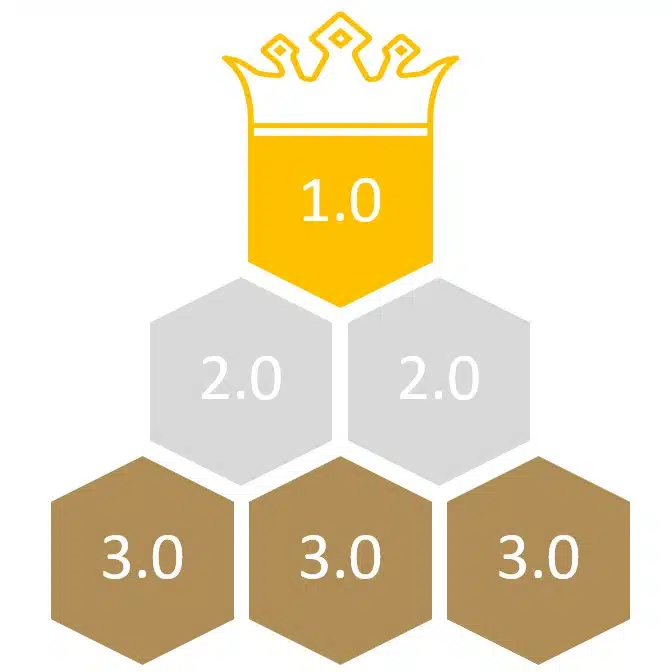
So What is Tiered Link Building Exactly?
This is a good question for anyone who is interested in making the most of your backlinks. The technique of tiered link building involves creating multiple tiers or levels of links, where each tier serves a specific purpose in boosting the authority and visibility of the target website. And rather than all the links going to your site, some would be backlinks for your backlinks, building up their trust flow. The main idea behind tiered link building is to create a natural and diversified backlink profile that mimics organic link growth.
The result helps you create the most impact with your SEO. By manipulating your backlinks, you have the opportunity to send website traffic precisely where you want it – specifically the pages you want your users to see.
Not only does this increase your SEO, but backlinking your backlinks is also a simple way to increase your rankings and boost your credibility with less risk of a spam penalty. If you’re interested in knowing more about how to make this work, this guide will walk you through the steps to implementation and give you the SEO boost you’re looking for.
Tiered Link Building and How It Works
SEO strategy works by using backlinks to determine reputability and to assign rankings to websites. This helps consolidate your impact but must be done correctly for the most benefit. That’s because not all backlinks are as beneficial as they could be.
By utilizing tiered link building, you can link your network by layering your backlinks, which increases their overall effectiveness and boosts the power of your website on search engines.
As you put together this hierarchy of links, each one passes its power down to the next, and so on and so forth. There are three layers to be aware of.
- Tier 1 links – these direct a backlink to your primary webpage
- Tier 2 links – these backlinks connect back to the tier 1 links
- Tier 3 links – each of these is directed at one of your tier 2 links
As you can see, each additional backlink that connects to a higher tier link increases your power and ultimately gets a user back to the most important page on your website. In other words, your users end up where there is the most benefit.
Keep in mind that backlinks do carry a certain degree of risk. This is more likely if they are tiered poorly. If you aren’t entirely confident in your skills of tiered backlink strategy, it’s a good idea to get a professional involved, like those who offer link building services on Upwork or other reputable sites where you can see reviews.
Benefits of Tiered Link Building
Done correctly, tiered link building has several benefits that you can take advantage of. Have a look at them below.
Low-Cost Strategy
One of the top perks of tiered link building is that it’s a low cost way to boost your SEO impact and online reputation. How?
- It’s efficient – by tiering your backlinks, you increase the impact of each of them, creating more value for every link, and potentially reducing the cost of your strategy to build links.
- You have control – tiered backlinking gives you control over which links to use and the pace at which you add them to your hierarchy. This gives you wiggle room when you create your budget.
- Magnify your tier 1 links – it can be costly to find and acquire backlinks that are high in quality. By adding lower quality backlinks that link to your tier 1 links, you can magnify them without spending a lot of money.
This is a great way to get the most out of your SEO strategy, while also keeping your costs affordable and within your budget.
Lowers the Chances of an Unnatural Link Profile
Your link profile is made up of the backlinks that lead back to your site. You want your profile to be natural and beneficial and you can do that in a few ways.
- Diverse links – building your tier of backlinks from a variety of sources, you reduce the reliability of one source. This makes your profile look more natural to the Google algorithm, while also reducing the risk of incurring penalties.
- Quality control – spend plenty of time ensuring that your tier 1 links are of the utmost quality. The lower links don’t require so much care, but you still need to make sure you are choosing quality backlinks at all tiers.
- Link velocity – this lets you have the control over when and how often you acquire backlinks. Don’t send all of your links to your top pages, you prevent getting too many, too quickly.
Avoiding penalties from Google is important, so paying attention to the quality and variety of your backlinks will optimize your link profile is a vital part of the tiered link building process.
Risks of Tiered Link Building
Just as there are several benefits that go along with your tiered link building strategy, there are also some potential downfalls to be aware of. The main goal is to stay out of trouble with Google so consider the following risks.
Penalties from Google
You must be careful with your tiered links or run the risk of dealing with Google penalties. This can happen in a couple of ways.
Links that lead to spam – If your tiered linking system leads to spam or other low-quality links, Google may penalize you.
Velocity of links – if you acquire too many links in a short time span, Google may be suspicious. Getting links at an unnatural pace can lead to penalties.
It’s best to have a variety of high quality and diverse links so that Google doesn’t see any red flags when it comes to your webpage.
Hard to Maintain
Being aware of how hard link building can get over time helps you stay prepared for when and if it happens.
- It’s complex – building and keeping up with your link network can be time consuming and complicated. This increases as the number of tiers you use grows so you need to keep track of your links to be sure they continue to provide value.
- Quality and diversity of links – it can be tempting to use lower quality and spam links as you add more tiers, but documenting your links can help you avoid this so you can see the results you want.
Careful planning and precise record keeping is vital for tracking your tiered linking strategy as it grows and develops.
Steps for Creating Your Link Profile and Tiered Links
This easy to execute 3-step plan can help you create an effective profile of tiered links for your profile.
- Build your tier 1 links – these links lead directly to your website and should get the most time, attention and money. Your tier 1 links should be unique and of high quality, as well as being from a reliable source and with information that is relevant to your website.
- Pile on tier 2 links – the next step involves adding links that lead back to your tier 1 links. While the guidelines for acquiring tier 2 links are a bit more relaxed, you still want to make sure to find quality links and avoid spam. Be sure that you choose a variety of tier 2 links that come from diverse sources and anchor texts. You might also consider placing your tier 2 links on guest websites.
- Add tier 3 links – as these links lead back to tier 2 links, you want them to have some quality, but can be a bit more lenient on what you choose. The number of tier 3 links you create has to be quite large since the amount of authority tends to be lower. Just be sure to stay away from spam and don’t acquire too many links at one time to avoid Google penalties.
Does Tiered Link Building Work?
The short answer is, that yes, tiered link building does work. However, to get the most out of it, without spending a fortune, you need to keep your hierarchy of links as natural as possible by following the advice laid out in this article.
Recent Comments